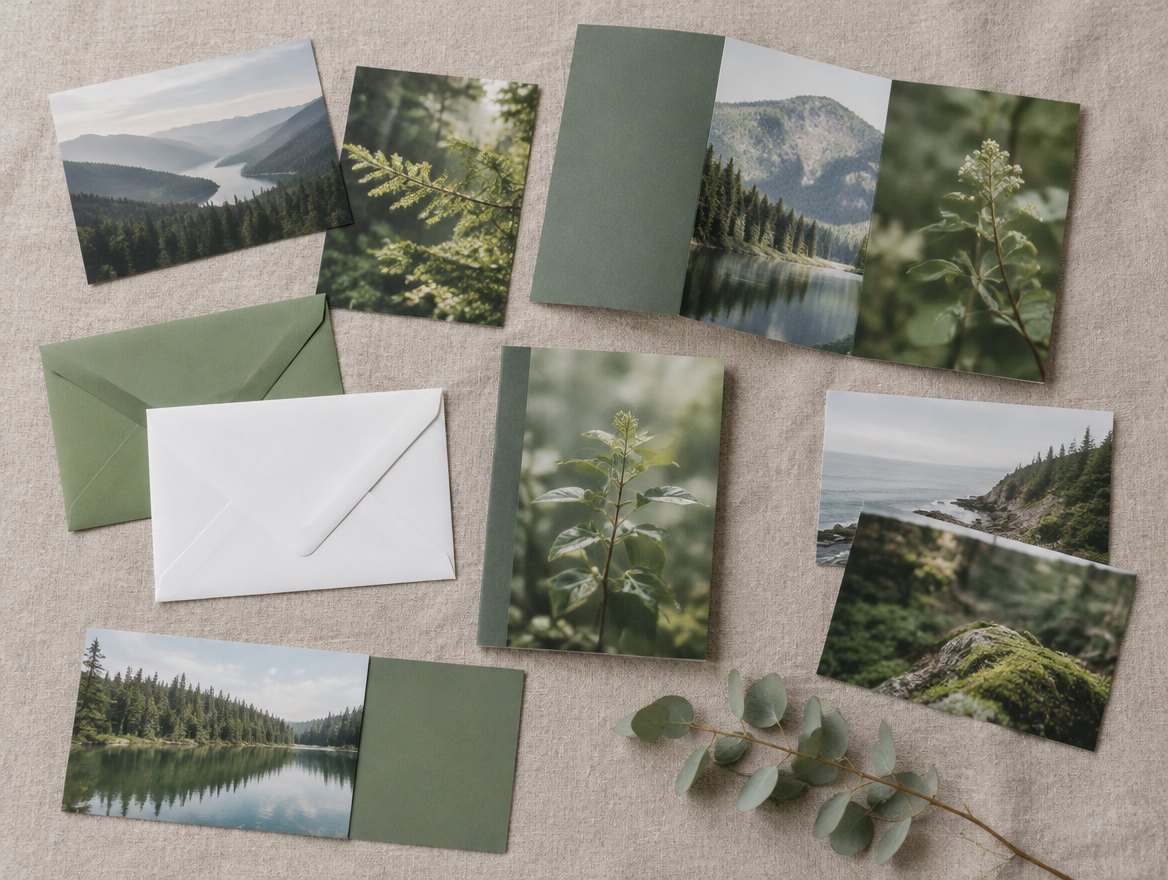
Direct mail postcards are the cheapest way to put a printed offer in a customer's hand. Pick a size that fits the USPS postcard limits (up to 4.25 by 6 inches) and you pay the lowest postage. Go bigger and you get more room to sell, but you pay letter or marketing mail rates.
That one choice, size, drives most of your cost and a lot of your results. Here is how to get it right.
What size should a direct mail postcard be?
The post office sets the rules, and they matter. According to the USPS Domestic Mail Manual, a card priced at postcard rates must be rectangular and fit these limits:
| Measure | Minimum | Maximum |
|---|---|---|
| Height | 3.5 inches | 4.25 inches |
| Length | 5 inches | 6 inches |
| Thickness | 0.007 inch | 0.016 inch |
| Weight | none | 3.5 ounces |
Cards that fail these limits are charged at letter prices instead. So a 4 by 6 inch card is the biggest card that still gets the postcard price.
Common sizes people print:
- 4 x 6 inches. The postcard rate size. Cheap and fast to mail.
- 5.5 x 8.5 inches. Half of a letter sheet. Roomier, but mailed as a letter-size piece.
- 6 x 9 inches. A popular size when you want a big, bold face. It is over the postcard limit, so expect higher postage.
- 8.5 x 11 inches. Close to a flyer. Use it when the offer needs real detail.
If you plan to blanket a neighborhood, read our guide on how Every Door Direct Mail works. EDDM has its own size and routing rules.
How much do direct mail postcards cost?
Three parts add up: design, printing and postage.
Postage is the part you can look up. USPS asked to raise the domestic postcard stamp from 61 cents to 65 cents, with the change planned for July 12, 2026. USPS also says its 2026 price change covers other mail classes. Bulk marketing mail uses a different price list, so check the current USPS price list before you budget.
Printing depends on paper stock, coating, quantity and turnaround. Quotes vary a lot by printer and run size, so ask for rate cards from at least two shops.
Design and data are the hidden costs. A mailing list that is wrong wastes everything else.
A simple way to estimate your total:
- Get a print quote for your quantity.
- Add postage per piece times quantity.
- Add list and design costs.
- Divide by pieces mailed to get your cost per card.
Then compare that to what one new customer is worth to you. Our post on direct mail response rates shows how to turn that into a break-even number.
What makes a postcard get read?
A postcard has about three seconds. Build for that.
- One offer. Not three. Pick the strongest.
- One headline that speaks to a problem or a benefit, big enough to read from arm's length.
- One action. Call, scan or visit. Give a reason to act now, like a deadline.
- One image that shows the result or the product. Skip stock photos that could be any business.
- Clear contact details on the front or back, in plain type.
Front side checklist
- Headline readable in three seconds
- Logo present but not the biggest thing
- One strong image
- Space around the text, not a wall of copy
Back side checklist
- Offer and deadline up top
- Short list of three benefits at most
- QR code or short web address that goes to one page
- Phone number, address, hours
- Mailing panel kept clear for the address and postal markings
The back of a card also carries the address block, so leave room. Your printer or mail house can send a proof that shows the postal area.
How do you track whether a postcard worked?
Never mail blind. Use a unique QR code, phone number or offer code for each mailing. Our guide on QR codes on print and mail walks through setup.
Response varies a lot by list and offer. One roundup of industry data from 4over4 puts typical prospect list response at a few percent and house lists higher, but that is from a vendor page that summarizes other reports. Treat it as a rough guide, then use your own test results.
A simple test plan:
- Mail two versions to small, equal groups.
- Change one thing, like the headline.
- Count responses for 4 to 6 weeks.
- Send the winner to the full list.
Should you send a single card or a series?
A series wins more often. People rarely act on the first touch. Mail the same list two or three times, a couple of weeks apart, and keep the look consistent. Change the offer or add a deadline each time.
Pair mail with email and ads for the same people. We cover that in integrated campaigns.
FAQ
What is the standard postcard size for direct mail?
The most common size is 4 by 6 inches. It fits the USPS postcard limits, so it gets the lowest postage. Larger sizes like 6 by 9 inches are popular, but they cost more to mail.
How much does it cost to mail a postcard?
USPS filed to raise the domestic postcard stamp from 61 to 65 cents, planned for July 12, 2026. Bulk marketing mail uses other rates. Check the current USPS price list before you budget.
What should go on a direct mail postcard?
One offer, one headline, one image and one action. Add a deadline and a way to track response, like a QR code. Keep the address panel clear.
How many postcards should you send?
Start with a test of a few hundred to a few thousand to a clean list. Compare two versions, then scale the winner. Expect to mail the same people more than once.
Ready to put a card in the mailbox?
We design, print and mail postcards, and you approve every proof before anything goes out. See our print and direct mail service, or request a free audit and we will map out a first test.