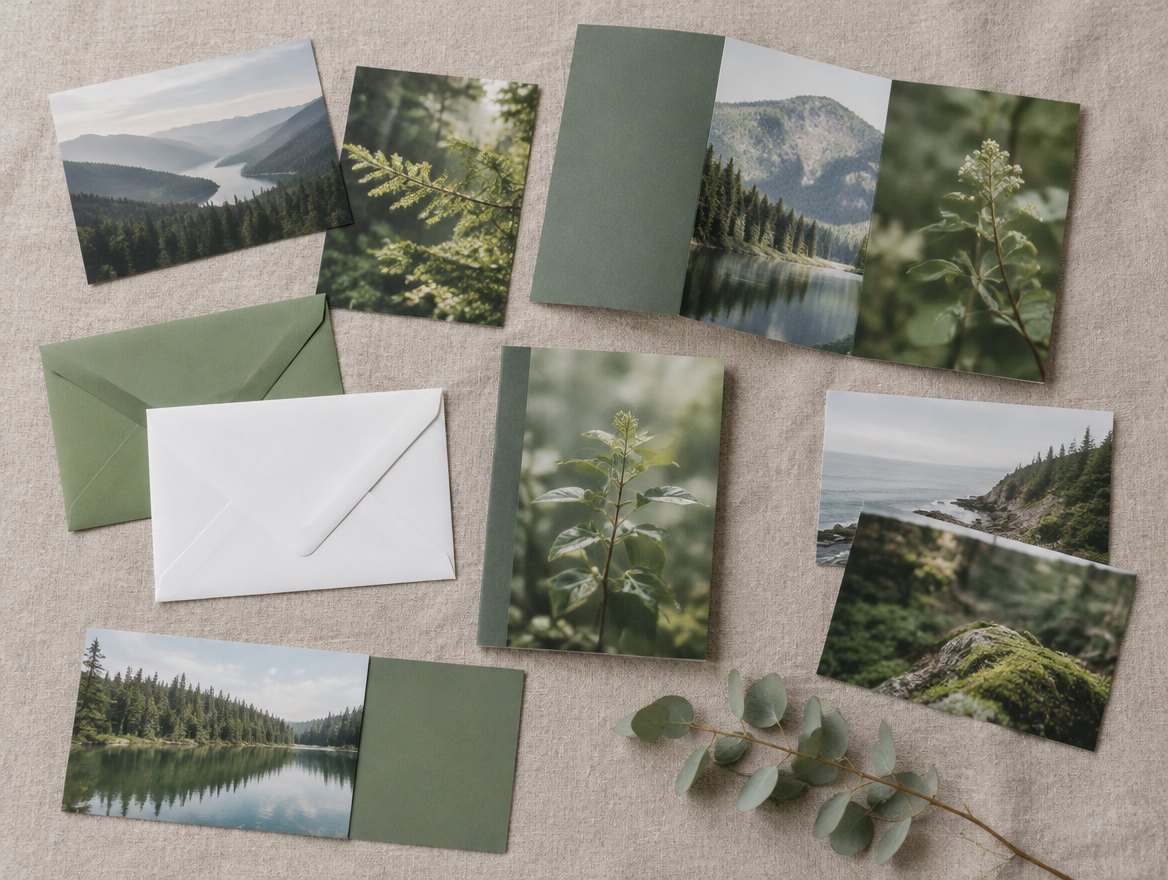
Direct mail marketing means sending printed pieces, such as postcards, letters or catalogs, to people by mail. It works best when you send a clear offer to the right list and track the response. For small businesses, it is a way to reach local buyers who may never see your online ads.
What is direct mail marketing?
It is any marketing you print and put in a mailbox. Common formats include postcards, letters, self-mailers, catalogs, brochures and flyers. You can mail to named people on a list, or to every address on a postal route.
It is also one of the easiest channels to measure. Every piece can carry its own code, URL or QR code.
Does direct mail still work?
Yes, when the list and offer are right. A benchmark roundup that cites the ANA/DMA Response Rate Report puts average direct mail response near 4.4%, with house lists at 5% to 9% and prospect lists at 2.0% to 4.4%. That roundup is secondary, and other versions of the report show different numbers, so use these as ballparks, not promises.
Readers also open it. A 2025 Lob survey reported that 84% of consumers read direct mail right away or the same day. Lob prints and mails for a living, so read that as directional.
For more on results, see Direct mail response rates: what to expect and how to beat them.
What are the main direct mail formats?
| Format | Best for | Notes |
|---|---|---|
| Postcard | Offers, events, reminders | Cheapest to print and mail |
| Letter | Services that need trust | Feels personal |
| Self-mailer | Menus, price lists | No envelope to open |
| Catalog | Product businesses | Higher cost, longer shelf life |
| Brochure or flyer | Detail and proof | Often paired with a letter |
We cover sizes and design in Direct mail postcards: sizes, costs and design tips.
How much does direct mail cost?
Cost has three parts: design, printing and postage. Printing prices vary by size, paper and quantity, so ask for quotes.
Postage is easier to pin down. The post office's Every Door Direct Mail (EDDM) Retail option for flats is listed at $0.26 per piece on the USPS site. It needs no special permit, and you can mail 200 to 5,000 pieces per day per ZIP Code. Always confirm the current rate on usps.com before budgeting, because prices change.
Mailing to a named list uses different rates. Ask your printer or mail house for a quote that includes postage.
How do you run a direct mail campaign?
Follow these seven steps.
- Pick a goal. Calls, visits, orders or event sign-ups.
- Choose the audience. A customer list, a purchased list, or every home on a route.
- Write one offer. One message, one action.
- Design the piece. Big headline, clear offer, one call to action, easy contact details.
- Add tracking. A unique phone number, URL, QR code or promo code.
- Print and mail. Order proofs. Check the mail date.
- Measure. Count responses for four to six weeks and compare to cost.
Tracking is where many small campaigns fail. See QR codes on print and mail: how to track offline marketing.
Should you use EDDM or a targeted list?
EDDM is simple and cheap per piece. It reaches every address on a route, so some people will not be your customers. A targeted list costs more per piece but can be more precise.
| Option | Strength | Weakness |
|---|---|---|
| EDDM | Low postage, fast setup, no list needed | Reaches everyone on the route |
| Targeted list | Can match your buyers | Higher cost per piece |
| Your customer list | Highest response in most benchmarks | Limited size |
Learn the details in EDDM explained: how Every Door Direct Mail works.
What mistakes should you avoid?
- Sending without an offer
- Using tiny type
- Skipping tracking
- Mailing once and giving up
- Using a bad list
Most direct mail works better as a series. People often act on the second or third touch. Pair it with email and ads for best results. See Direct mail is back: why mailboxes beat inboxes in 2027.
Can we handle it all?
Yes. We design, print and mail or ship it, and you approve proofs and numbers before anything goes out. See our print and direct mail service.
What should a good direct mail piece say?
Keep it simple. Use one headline that names the benefit. Use one image that supports it. Add one offer with a deadline. Give one way to respond, plus a backup.
Skip long copy on postcards. People decide in seconds. If your offer needs explaining, use a letter or a self-mailer. Put your name and phone number where it can be seen without hunting.
Test one thing at a time, such as the headline or the offer. Mail two versions to similar lists and compare the response. After two or three rounds you will have a winner you can trust.
FAQ
How many pieces should I mail first?
Start with enough to read results, often a few thousand for a local test. Smaller runs can mislead you. Ask a mail house to suggest a size based on your area.
What is a good response rate?
It depends on list and offer. Benchmarks cited above range from about 2% for cold prospect lists to 5% or more for house lists. Compare your own result to your cost per customer, not just the rate.
Is direct mail better than email?
They do different jobs. Email is cheap and fast. Mail stands out in a quiet mailbox and reaches people who ignore email. The best plans use both.
Do I need a permit?
Not for EDDM Retail, according to USPS. Other mail types may require permits or a mail house. Ask your printer.
Next step
Want a mailing plan with real numbers behind it? Request a free audit.